

Commentary
One is hopeful. One is realistic. One is cautionary.
Andrew Leber, Sam Worby
{
  "authors": [
    "Frederic Wehrey",
    "Charles H. Johnson"
  ],
  "type": "commentary",
  "blog": "Emissary",
  "centerAffiliationAll": "dc",
  "centers": [
    "Carnegie Endowment for International Peace"
  ],
  "englishNewsletterAll": "menaTransitions",
  "nonEnglishNewsletterAll": "",
  "primaryCenter": "Carnegie Endowment for International Peace",
  "programAffiliation": "MEP",
  "programs": [
    "Middle East"
  ],
  "regions": [
    "Middle East",
    "Gulf",
    "Iran",
    "Saudi Arabia",
    "Oman",
    "Qatar",
    "Bahrain",
    "Kuwait",
    "United Arab Emirates"
  ],
  "topics": [
    "Domestic Politics",
    "Foreign Policy",
    "Civil Society"
  ]
}
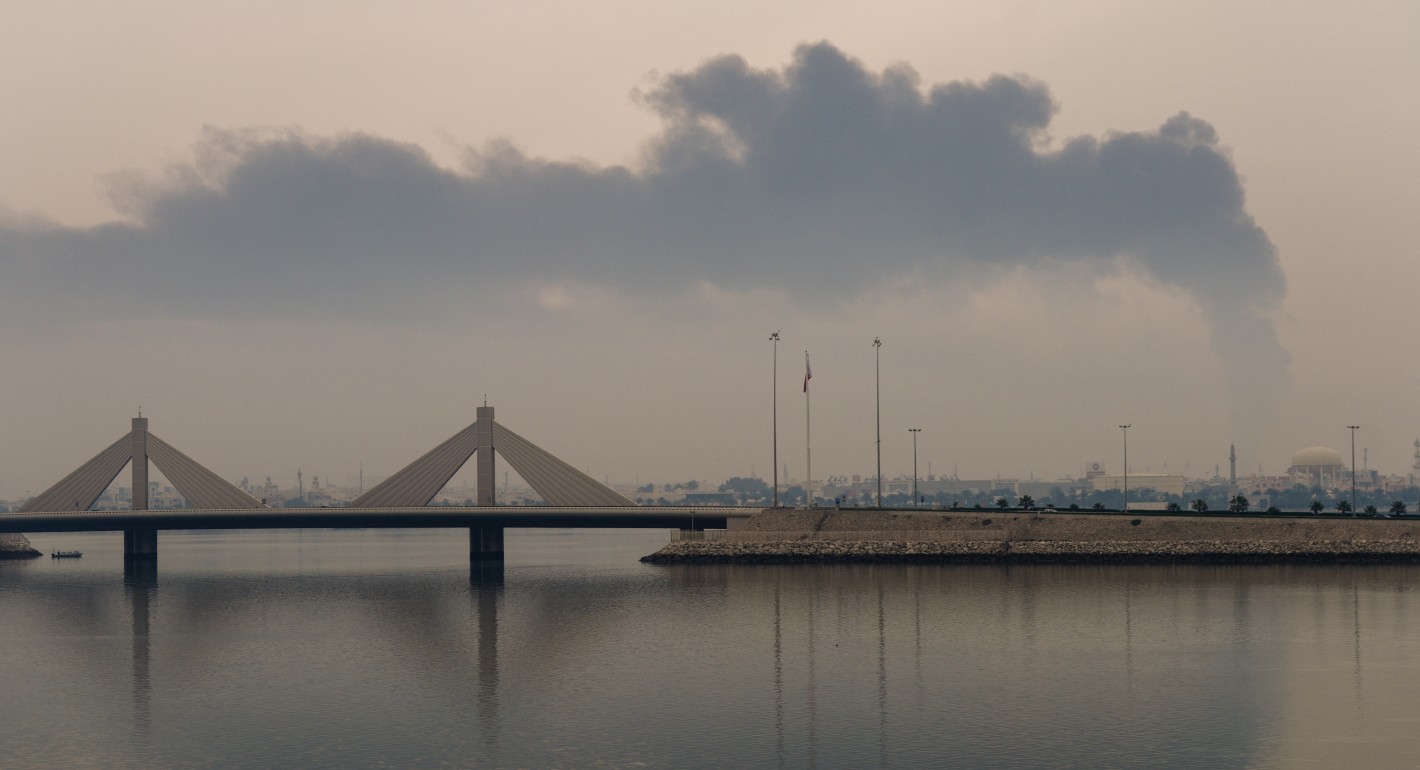
Smoke rises from an Iranian strike on fuel tanks in Muharraq, Bahrain, on March 12, 2026. (Photo by Fadhel Madhan/AFP via Getty Images)
The conflict is exposing the flaws and fissures of their domestic governance and social cohesion.
The U.S.-Israeli war on Iran has had dire security and economic consequences for the Arab states of the Gulf Cooperation Council (GCC). Iranian missiles and drones struck airports, hotels, and energy infrastructure across the region, triggering the largest oil supply shock in the history of global energy markets and a near-total collapse of aviation and tourism. Attacks on desalination plants have raised fears of a humanitarian emergency. Threats to shipping through the Strait of Hormuz have disrupted over 70 percent of the region’s food imports. Externally, the war has prompted questions about the risks and costs of the region’s reliance on American security guarantees and bases.
Beyond these effects, the Iran war is a stress test for domestic governance and social cohesion inside Gulf states, surfacing and sharpening preexisting fissures and vulnerabilities while introducing new pressures. Among the more prominent of these dynamics are a worsening crackdown on freedom of expression and increased securitization more broadly; a rise in sectarian tensions and internal scapegoating amid the very real threat of Iranian subversion; and the imperilment of the Gulf’s migrant labor communities, upon which much of the region’s prosperity relies. None of these shocks pose a serious challenge to stability or the survival of the region’s monarchies—Gulf regimes are hardly brittle and have weathered such shocks in the past. But they are still important in revealing shortcomings of the reigning model of strict authoritarianism paired with economic growth, and the gap between those who have benefited from its success and those on its peripheries and margins.
Among these aftershocks, none is more revealing than the wave of arrests for filming and sharing footage of missile strikes and bomb damage, often prosecuted under charges such as “spreading false news and harming the country’s national interest.” Regardless of the pretext, the crackdowns should be seen less as a show of strength than as a symptom of weakness: Rulers who have spent decades cultivating an image of stable modernity are now criminalizing the act of shattering that image. More broadly, the arrests expose the fragility of what passes for a social contract in the Gulf—a bargain of acquiescence in exchange for prosperity and security. And as with autocrats everywhere, the danger is that this suppression, occasioned by the pressures of an active war, could outlast the conflict itself, worsening already dismal track records on freedom of expression.
Across the Gulf, the varying intensity of repression reflects a mix of factors, including the distinct political cultures of each state, the degree of damage they have suffered, and the nature of their relations with the United States and Israel. Those most supportive of the war have had the strongest incentives to suppress its blowback at home. Less tangibly, public opinion plays a part in the perceived depth of pro-Iranian sympathy among their own citizens.
The United Arab Emirates has launched one of the more aggressive Gulf state crackdowns. As of early April, security services in Abu Dhabi alone had reportedly made 375 arrests for filming damage from strikes or “publishing misleading information.” According to the attorney general, the arrests—which swept up people of various nationalities—fell into three expansive categories: publishing authentic but sensitive video clips, fabricating visual content, and “glorifying a hostile state and its political and military leadership.” The deeper subtext concerns Abu Dhabi’s acute sensitivity to any damage to the country’s carefully curated image as an enclave of stability and prosperity and to the nationalism it has worked hard to cultivate among citizens. Protecting both, in the regime’s calculus, requires a firm grip over the informational space, making the “media battle,” as one Emirati official put it at a recent GCC meeting, “no less important than the battle of arms.”
Equally aggressive, if not more so, is Qatar, which attempted to steer a neutral course in the early stages of the war but has hardened its posture as the conflict has dragged on, particularly as Iranian retaliation has inflicted mounting damage on its natural gas infrastructure. As of early March, 313 people had been arrested “for filming and circulating unauthorized video clips, spreading misleading information and rumours, and disseminating content intended to incite public concern,” according to the Qatar News Agency.
Around the same time, the Qatari security services announced the arrest of two Islamic Revolutionary Guard Corps (IRGC) cells tasked with espionage and sabotage. The details remain unclear, and while the IRGC and Iranian intelligence agencies are very much engaged in such operations, the arrest underscores the risk that regimes facing genuine external subversion will use that threat as a license for internal witch hunts, conflating legitimate security concerns with the suppression of dissent. Relatedly, it points to the danger that entire communities could come under scrutiny—by regimes or their supporters—during the war and its aftermath based on perceived loyalty rather than demonstrated action.
Nowhere is the risk of sectarianism more apparent than in Bahrain, where Shia citizens constitute an estimated majority of the population and have long been marginalized from political and economic power under the ruling Sunni monarchy. The longstanding divide shaped the 2011 uprising and crackdown as well as the marches and protests that erupted at the beginning of the war.
Most were peaceful, but scattered reports of violence have emerged, and arrests following the outbreak of war have since taken on a sectarian hue. This crackdown has moved on two fronts: Security forces reportedly detained sixty to sixty-five protesters, the majority from Shia neighborhoods, while authorities separately arrested more than fifty individuals for sharing videos and social media posts, charging them in exceptionally harsh terms with “betrayal of the nation“ and, in a few instances, requesting the death penalty. According to a separate nongovernmental source, more than 160 people—including two prominent artists—have been arrested as of mid-March for alleged sympathy for Iran or similar charges. And at least one person detained in connection with the war has died in police custody: a thirty-two-year-old Shia man who had been previously imprisoned and whose body bore signs of torture and blunt force trauma.
In tandem with this crackdown, the Bahraini regime and its supporters have mounted a robust informational campaign with a heavy-handed insistence on national unity. The government-controlled Bahrain News Agency, for example, has published stories with headlines such as “Bahraini families, institutions express solidarity amid Iranian attacks“ and “National Guard Commander highlights Bahrain’s security, national unity.”
Hints of sectarianism have also surfaced in Kuwait, which has a sizable Shia minority and has historically faced periods of political strife along Sunni–Shia lines, though not typically to the same degree or as consistently as in Bahrain. Most notably, Kuwait announced in mid-March the arrest of fourteen Kuwaiti citizens and two Lebanese nationals in two separate raids, both allegedly linked to the Iran-backed Shia militant group Hezbollah. While Hezbollah has denied the claim and no attacks resulted from supposed plots, the arrests raise concerning parallels to the country’s most recent spate of violent sectarianism: In 2015, Kuwait was rocked by an Islamic State attack on a Shia mosque in Kuwait City that killed twenty-seven worshippers, followed by the arrest of twenty-six Shia suspects with alleged links to Hezbollah. Regardless of a genuine connection between the most recent arrests and Hezbollah, even the appearance of Shia disloyalty at a time of heightened security concerns could threaten the delicate relationship the monarchy has developed with Kuwait’s Shia minority community.
At the same time, Saudi Arabia has portrayed itself as largely immune from sectarian tensions, despite the government’s historically tenuous relationship with the kingdom’s Shia minority community—a focal point of the country’s Arab Spring demonstrations. Staunch regime supporters have pointed to Saudi national unity as the reason behind this relative tranquility, while others indicate a general fatigue with the tired narratives of sectarian divide. The monarchy’s attempt to foster a relatively moderate variant of Salafism while also promoting a Saudi nationalism that is more inclusive of religious—and other—minorities may offer a partial explanation for the absence of sect-based polarization. But without real transparency and independence in the Saudi media landscape, measuring the extent and impact of the reforms is difficult.
A quieter but no less important aftershock of the war concerns the disparity between the Gulf’s wealthy citizens and residents and its low-income migrant workers. Migrants account for just over half of the GCC countries’ overall population, according to 2024 World Bank estimates. After three weeks of strikes from Iran, at least twenty-three civilians have died in Gulf countries, twenty-one of whom were noncitizens. Further reporting also indicates that the migrant populations may be disproportionately suffering injuries as well, though GCC states have not been releasing comprehensive data on injured persons’ nationalities.
South Asian migrants constitute well over half of the Gulf’s migrant workforce. These workers move from India, Pakistan, Nepal, and Bangladesh for the Gulf’s coveted jobs and the opportunity to send money back to family in their home countries. (India alone receives $125 billion annually from these remittances.) Still, these numbers do not fully account for the distribution of civilian deaths.
The discrepancy is better explained through the vulnerabilities born of the kafala system, a catchall for practices pertaining to sponsored migrant labor, from foreign consultants to construction workers. Experiences under these systems vary dramatically by sector and country, but systemic abuses generally derive from employers’ extensive control over migrant mobility, often leading to unfair pay, unacceptable housing, unsafe working conditions, and unaccountable subcontracting. Moreover, many of these jobs, such as sanitation, construction, and delivery services, are impossible to do remotely. As a result, Iranian attacks pose a disproportionate threat to much of the Gulf’s migrant population, with strikes killing workers at residential sites and in delivery vehicles.
Despite the glaring shortcomings of the kafala system and the war’s uneven impact on these communities, the region threatens to only further exacerbate this existing divide. Even prior to the war, Kuwait recently instated a new law requiring private-sector workers to obtain exit permits from employers. Qatar’s Shura Council had considered doing the same, which would undo reforms responding to international criticism over migrant labor practices preceding the 2022 FIFA World Cup in Qatar.
Continuing with these rollbacks may pose too great a reputational risk at a time of increased scrutiny over the region’s stability from the Gulf’s economic partners. Still, as GCC governments crack down in the name of national security—with migrants occasionally caught in the crosshairs—while the war’s economic ramifications apply pressure to regional regimes, the pretext and incentive to revisit recent reforms to this lucrative system may prove too tempting to resist.
These three governance challenges and social fissures are not new in the Gulf but have been thrown into sharper relief by the Iran war. Of them, securitization and the crackdown on freedom of expression are the most worrisome for the region’s long-term prospects. To be sure, authoritarian retrenchment and consolidation have been features of the post-Arab Spring period, but the new wave of arrests connected to the war threatens to entirely eliminate recent modest gains. Alarmingly, the arrests are targeting not just ordinary citizens and expatriates sharing images or videos but accredited journalists reporting on the war: Both Qatar and Kuwait, among the more tolerant of the Gulf monarchies, have detained journalists amid a broader environment of arbitrary reprisal for coverage of Gulf security.
The resulting lack of transparency could create a vicious cycle in which the war’s full effects, especially on vulnerable communities, are cloaked from scrutiny by the region’s own citizens and the outside world alike. In Bahrain—the Gulf’s most at-risk state in terms of social cleavages—the absence of news coverage in the war’s early days spawned unverified rumors of violent protests and regional intervention. The opacity continued weeks later in the apparent coverup of the Shia detainee’s death in custody. Yet, in an encouraging development, the Bahraini entity charged with investigating police abuses arrested and charged the intelligence officer involved, apparently in response to online outrage and pushback. Undercutting the development, however, the monarchy announced on April 19 that it would be reviewing citizenship entitlements for “those who have betrayed the nation.”
Beyond sectarianism, wealth disparities and economic marginalization are other fissures the Iran war has sharpened. The prewar kafala reforms, undertaken largely to blunt international criticism, never delivered the security and prosperity that drew migrants to the region, and the war has only widened the gap. While some commentators from the region have celebrated the retention of foreign workers while reporting a lack of tension between citizens and migrants, systemic barriers remain for migrants seeking to relocate, and any rollbacks on migrant protections could further jeopardize regional labor while deterring future expatriates at every economic level.
Even as this war has exposed flaws in governance and economic organization across the Gulf, these trends do not pose a serious risk to national viability—even in states like Bahrain facing inordinate social strife. If anything, the stress tests reveal an opportunity. As regime impulses lurch toward tighter control—whether over perceived security threats or economic downturns—zealotry may prove self-defeating. Draconian measures to monitor and silence disaffected publics risk backlash down the line, and continued failures to protect migrant workers could undermine a vital engine of the region’s economies. Gulf monarchies would do well, then, to accelerate rather than pause their ongoing reforms, fostering greater resilience, inclusivity, and unity.
The latest from Carnegie scholars on the world’s most pressing challenges, delivered to your inbox.

Senior Fellow, Middle East Program
Frederic Wehrey is a senior fellow in the Middle East Program at the Carnegie Endowment for International Peace, where his research focuses on governance, conflict, and security in Libya, North Africa, and the Persian Gulf.
Charles H. Johnson
James C. Gaither Junior Fellow, Middle East Program
Charles H. Johnson is a James C. Gaither Junior Fellow in the Carnegie Middle East Program.
Carnegie does not take institutional positions on public policy issues; the views represented herein are those of the author(s) and do not necessarily reflect the views of Carnegie, its staff, or its trustees.
One is hopeful. One is realistic. One is cautionary.

Andrew Leber, Sam Worby
Four Middle East experts analyze the region’s reactions and next steps.


Amr Hamzawy, Andrew Leber, Eric Lob, …
Why the Iran ceasefire isn’t a quick fix to the Strait of Hormuz energy crisis.


Helima Croft, Aaron David Miller
A conflict launched in the name of American security is producing the opposite effect.

Sarah Yerkes
Going to war was the U.S. president’s decision, for which he alone is responsible.

Daniel C. Kurtzer, Aaron David Miller